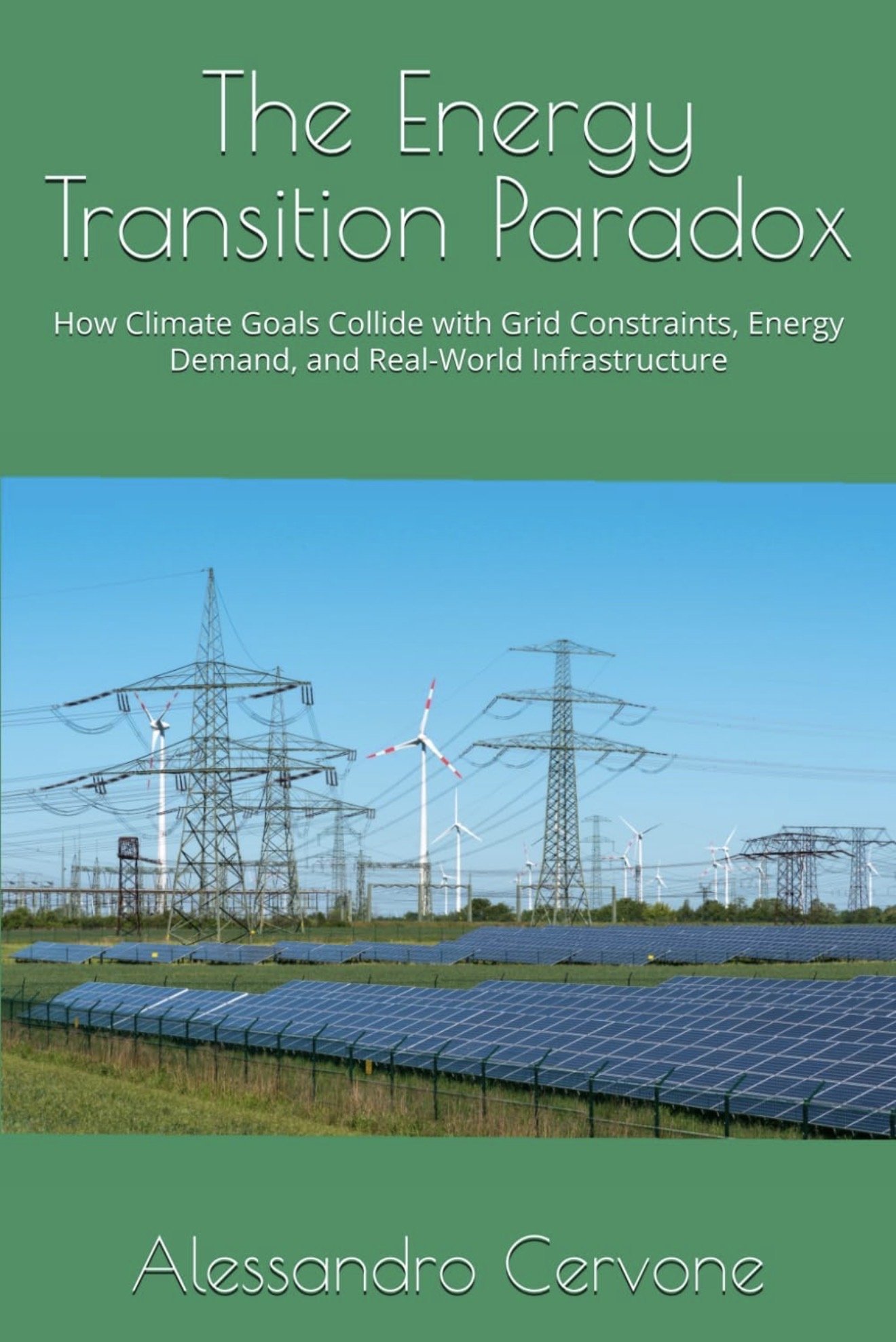
The Energy Transition Paradox: How Climate Goals Collide with Grid Constraints, Energy Demand, and Real-World Infrastructure
Check out the third book published by our President on Amazon Books (click on the image below):
An engineer's examination of how climate goals collide with electric-grid realities, infrastructure constraints, and the laws of physics.
The Energy Transition Paradox examines one of the most important infrastructure challenges of the twenty-first century: how to maintain a reliable and affordable electric grid while pursuing large-scale decarbonization, transportation electrification, and rapidly growing electricity demand.
Written from the perspective of a professional engineer with more than four decades of experience in the electric power industry, this book explores the intersection of climate policy, electric-grid reliability, energy security, and real-world infrastructure constraints. Rather than approaching the energy transition as a political debate, Alessandro Cervone analyzes it as an engineering challenge governed by physics, economics, and system reliability.
Topics include:
Climate science, uncertainty, and model performance
Electric-grid operations and reliability
Renewable energy integration and storage limitations
Transmission and distribution constraints
Transportation electrification and EV charging infrastructure
Case studies from New York, California, Texas, Europe, Australia, and China
Energy policy, public trust, and the practical realities of large-scale electrification
The Energy Transition Paradox challenges readers to think critically about how society can balance reliability, affordability, resilience, and sustainability while navigating one of the most ambitious technological transformations in modern history. This book is essential reading for engineers, policymakers, utility professionals, students, and anyone interested in the future of energy.